
Geophysical well Logging
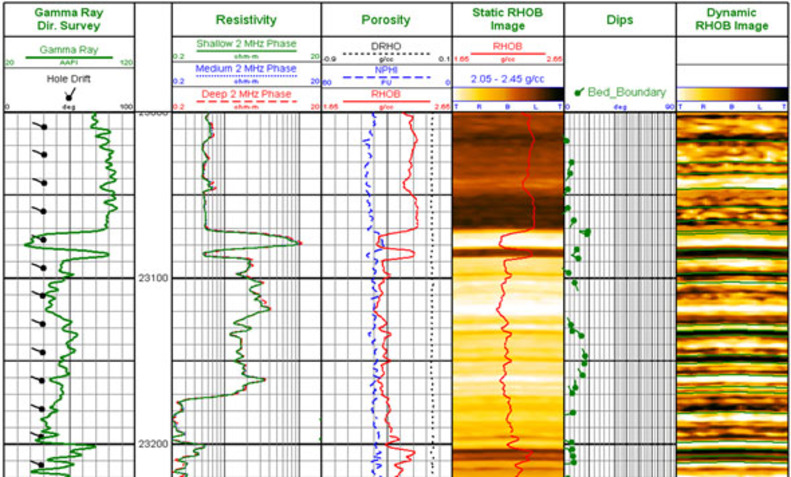
Resistivity & Self Potential Log
In order to identify the subsurface disposition of aquifers, borehole geophysics is employed in groundwater to gather data on lithology, fractures, permeability, porosity, and water quality. Borehole geophysical logging is also used to measure parameters such as Self Potential (SP), Single Point Resistance (SPR), Long Normal Resistivity (N64"), Short Normal Resistivity (N16"), and Natural Gamma (NG) in order to determine the depth range of saturated sand and gravel formations for the purpose of designing the well assembly. In order to prevent tapping these zones, the depth ranges of saline groundwater zones are also marked and designated for cement sealing and inserting blanks in the well assembly against those depth ranges. With geophysical borehole logging, the correct orientation and state of casing and screen pipes in a well may be quickly assessed.
Get a Quote!